

From EVs and batteries to autonomous vehicles and urban transport, we cover what actually matters. Delivered to your inbox weekly.
Electric cars were meant to clean up mobility, but somewhere along the way, they got bigger, heavier, and more complicated. Today’s EVs might emit less on the road, yet they demand more from the planet – massive batteries, global supply chains, and price tags that put “sustainable” out of reach for most drivers.
That’s the problem Avatar Mobilité set out to fix. The French startup isn’t chasing horsepower or luxury interiors, but efficiency. Real, measurable, everyday efficiency.
Their first vehicle, the Ulive, takes the idea of an electric car and strips it down to what truly matters – enough speed for daily life, enough range to get you where you’re going, and just enough energy to make it all work without waste.
Built light, solar-assisted, and designed for easy repair, the Ulive feels less like a car of the future and more like a car built for right now.
Avatar Mobilité was born far from Paris or any major tech hub – in La Rochelle, on France’s Atlantic coast. It started in 2021 with three people who shared the same frustration – electric mobility was getting cleaner, but not simpler.
Frédéric Mourier, a designer who had worked in aerospace and automotive R&D, wanted to bring elegance and efficiency back into vehicle design. Carmen Blanchard, an operations engineer, knew how to turn ideas into reliable production systems. And Benjamin Persiani, a financial strategist, brought the structure needed to turn a prototype into a company.
Together, they spun Avatar out of Esprit 360, a local innovation lab that encouraged small, bold experiments in sustainable mobility. Their goal was to prove that mobility could be lighter, smarter, and built closer to where people actually live.
They set out to create a vehicle that anyone can afford, assemble, and maintain – starting with a design that values efficiency over excess.
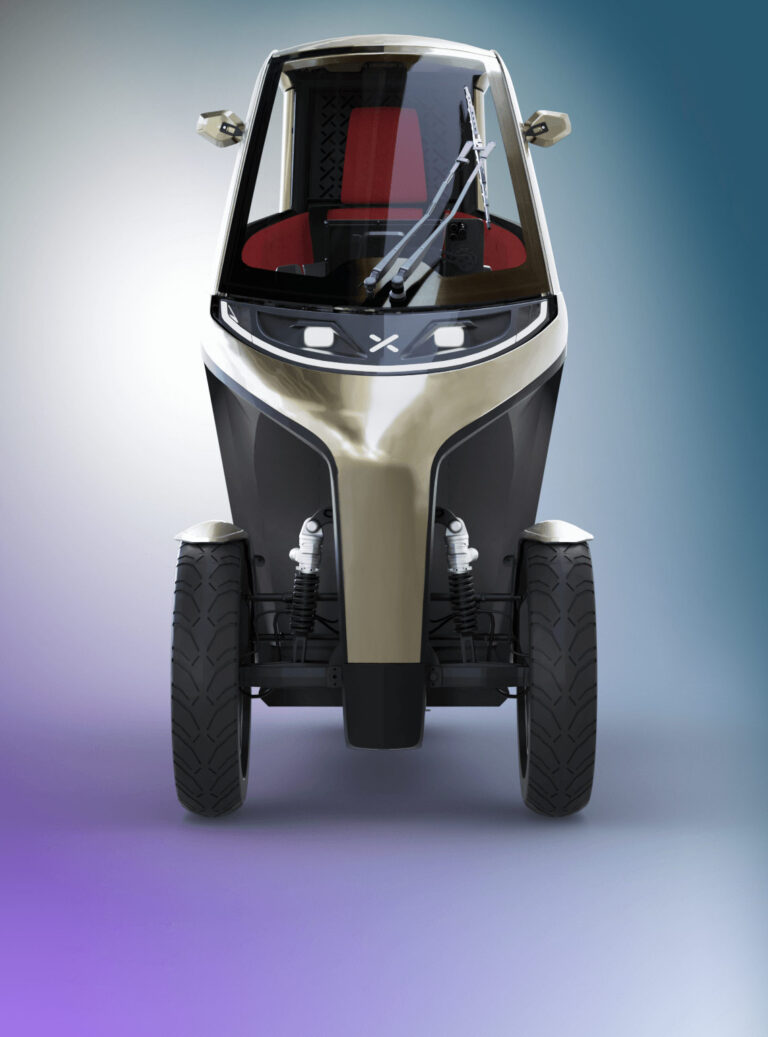
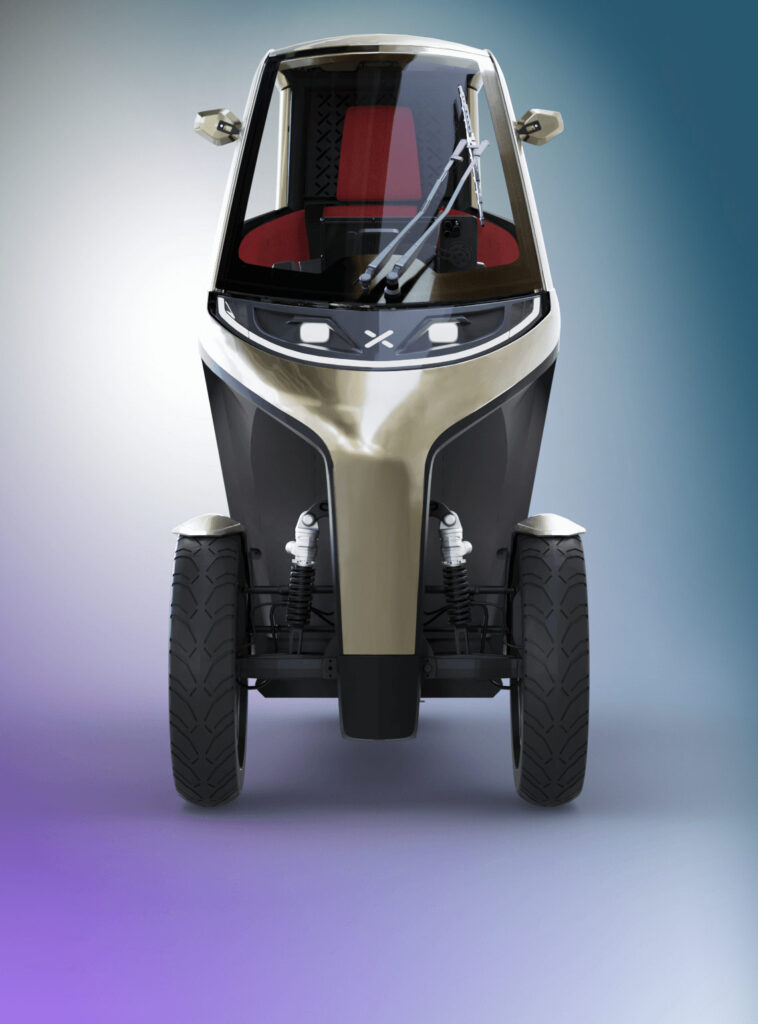
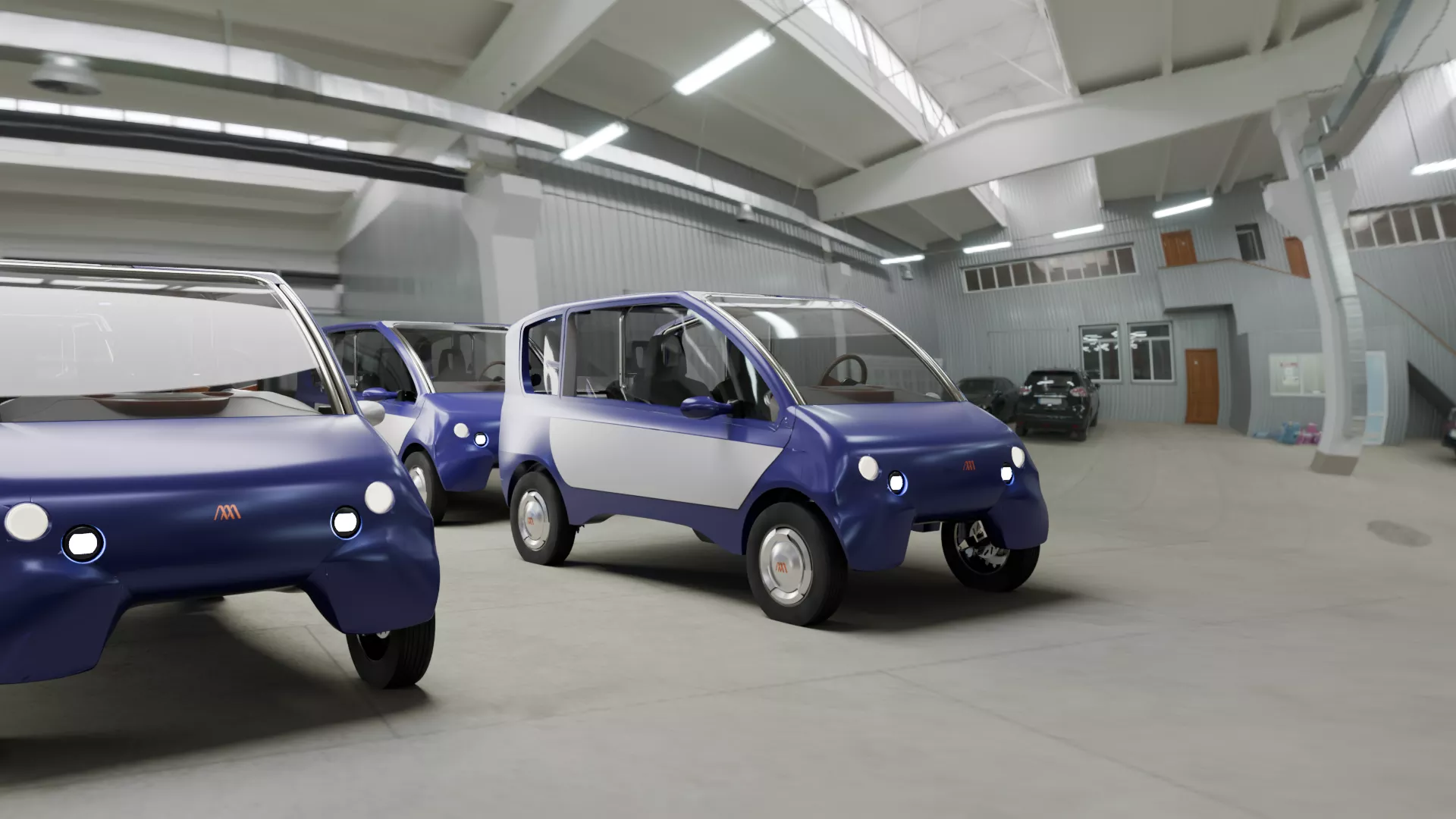
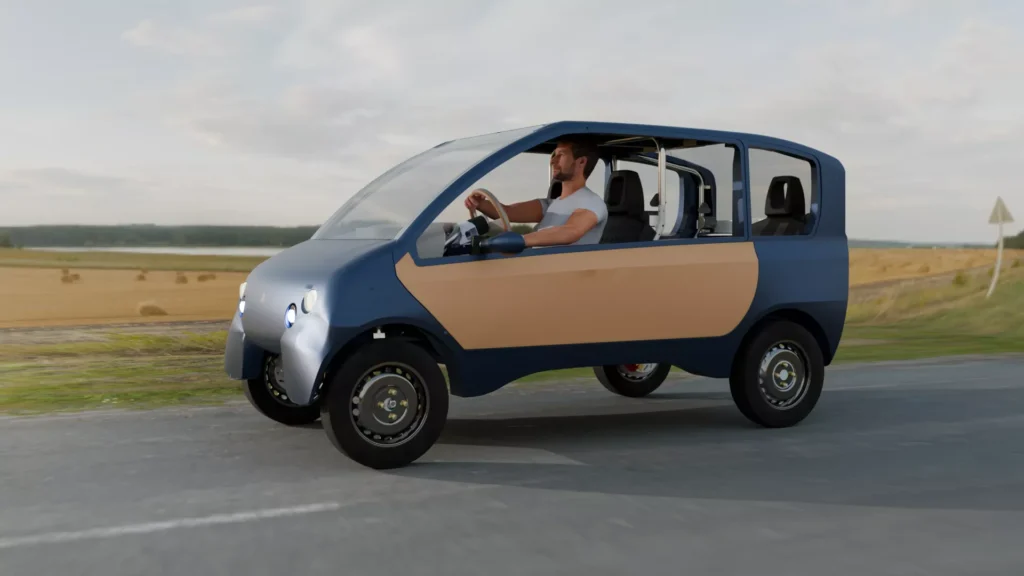
Meet the Ulive – a four-seat electric vehicle that thinks small to solve big problems. It weighs just 400 kilograms, uses about five times less energy than a compact EV, and can still hit 90 km/h on open roads.
Its trick isn’t speed or software. The Ulive runs on two swappable 3.5 kWh batteries (totaling 7kWh), light enough to lift, easy to replace. No need for fast chargers with Ulive. Simply unplug, swap, and keep moving. On sunny days, a solar roof quietly adds another 20 km of free range, feeding the car as it sits parked or cruising.
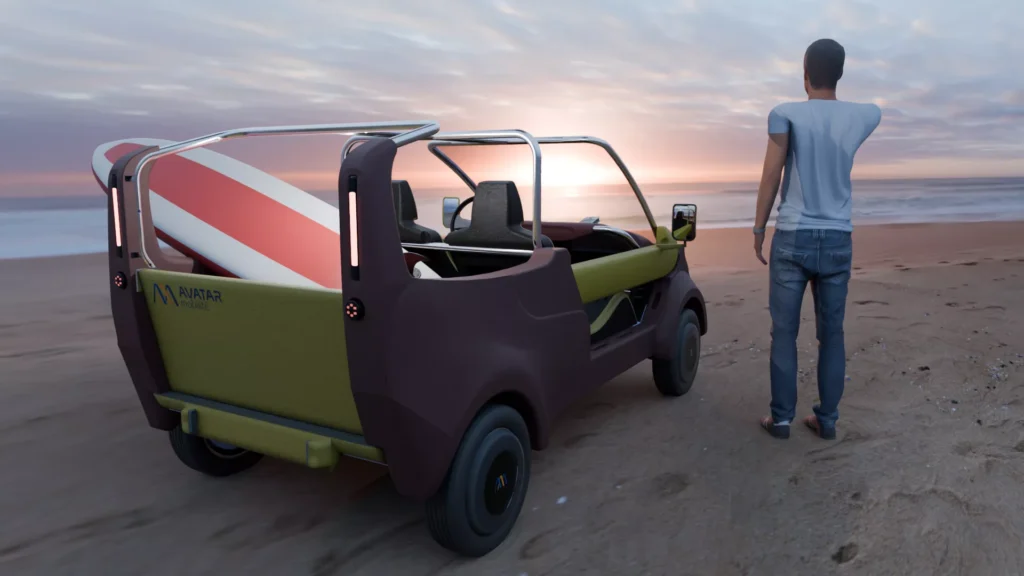
Despite its small footprint, the Ulive fits four passengers or 400 kg of cargo, making it just as useful for families as for small businesses or local fleets. Inside, it’s straightforward – a steel frame for safety, minimalist controls, and a dashboard that connects to your phone. Everything you need, nothing you don’t.
Ulive’s lightweight body, modular batteries, and recyclable materials prove that progress doesn’t always mean adding more. Sometimes it means doing the same job with far less.
Most automakers scale up. Avatar wants to scale out.
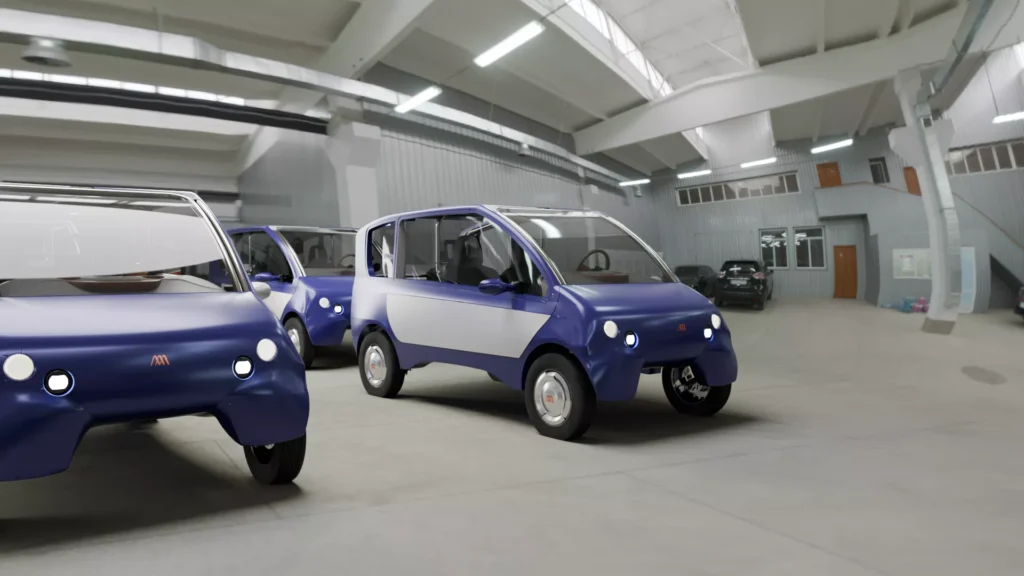
Instead of one massive plant churning out identical vehicles, the company is building a network of micro-factories. They are designed as small, modular workshops that assemble Ulive vehicles close to where they’ll actually be used. Each factory handles assembly, maintenance, and local customization, keeping production jobs in the region and cutting the emissions that come from shipping vehicles across countries.
Parts are standardized, designs are shared, and everything fits into a repeatable system that can be set up in a matter of weeks. A micro-factory doesn’t need industrial land or a huge workforce, but skilled workforce, community support, and access to Avatar’s open design files.
And that openness is the boldest part. Avatar Mobilité’s vehicle and factory plans are open-source, allowing engineers, local entrepreneurs, and even educational institutions to improve or adapt the design. It’s a deliberate break from the closed, proprietary mindset that dominates the auto industry.
If it works, this approach could redefine how France, and eventually Europe, builds electric vehicles – smaller, cleaner, and made by the communities that drive them.
Avatar Mobilité may be small, but it’s already getting noticed in big places. The team’s work on the Ulive has drawn praise from both government innovation programs and clean-tech leaders across Europe.
The company won France’s i-Nov innovation grant, receiving close to €1 million in funding for its R&D – a strong vote of confidence for a startup that’s still building its first production model. Soon after, the Solar Impulse Foundation added Ulive to its list of officially recognized “Efficient Solutions,” citing its rare mix of ecological design and economic viability.
In 2025, Avatar took home a Tech For Future award from La Tribune, highlighting its role as one of France’s most promising clean mobility ventures. The team has also been invited to Renault’s Re-Factory Demo Day and VivaTech, two of the country’s biggest showcases for innovation in sustainable manufacturing.
Each milestone reinforces the same point – Avatar Mobilité is a credible player in France’s next wave of mobility engineering.
Avatar’s growth plan mirrors its product philosophy – it’s simple, local, and efficient.
Instead of chasing mass consumer sales, the company is starting where it makes the most sense: municipal and corporate fleets. Cities, delivery companies, and industrial campuses are under pressure to cut emissions fast, and Ulive gives them a realistic way to do it.
Each micro-factory that builds Ulive cars also doubles as a service and support hub. That means faster delivery times, localized maintenance, and fewer logistics emissions. It’s a circular model by design – build, sell, repair, and recycle within the same region.
The pricing follows the same logic. It’s around €15,000 per vehicle, keeping ownership costs within reach for small businesses and public projects. The swappable battery system further lowers operational expenses, removing the need for high-cost charging infrastructure.
With backing from Crédit Agricole, Airbus Group Innovations, and several private investors, Avatar Mobilité is proving that you can scale mobility without scaling waste. It’s a lean business model built to grow sustainably and stay that way.
The EV industry has become obsessed with range, speed, and screens. All the metrics that look great on a spec sheet but don’t always make the world cleaner. Avatar Mobilité is running a completely different race.
Not chasing performance, but optimizing for resource efficiency and local resilience. This means building vehicles that use fewer materials, consume less energy, and can be produced right where they’re needed.
Where most automakers compete with one another, Avatar competes with waste. Every design choice, from Ulive’s lightweight frame to its open-source factory model, is about doing more with less.
Other European micro-EV players like Microlino, Eli Electric, or Sono Motors share parts of that vision, but few combine solar charging, swappable batteries, and community-based production in a single system. Ulive bridges that gap, showing how frugality and innovation can go hand in hand.
If Avatar succeeds, it will redefine how Europe thinks about manufacturing, proving that sustainability can be built, one micro-factory at a time.
The road from prototype to production is usually long, expensive, and filled with compromises. Avatar Mobilité seems determined to take the scenic route, one that prioritizes readiness over rush.
In 2025, the team is focused on completing European type approval for the Ulive, finalizing crash tests and compliance so it can legally hit public roads. Once certified, the first production-series vehicles are set to roll out in 2026, built entirely in France through Avatar’s pilot micro-factory model.
The real expansion begins in 2027 and 2028, when Avatar plans to replicate this model across the country with small local workshops, each capable of assembling and servicing Ulive vehicles with regional teams. These early hubs will prove whether decentralized manufacturing can scale without losing quality or efficiency.
By 2029, the company expects to expand beyond France with localized versions of Ulive, including cargo and fleet variants designed for urban logistics, public services, and delivery use.
It’s an ambitious roadmap for a small team from La Rochelle, but every milestone feels grounded in their philosophy – build carefully, stay light, and grow through collaboration.
Electrification is progress, but it’s not the finish line. Making cars electric without making them efficient just shifts the problem somewhere else. That’s why Avatar Mobilité’s approach feels so refreshing – it doesn’t aim to reinvent driving, it aims to right-size it.
The Ulive shows what happens when smart design replaces brute force and when efficiency drives innovation. It’s proof that technology can serve people without overwhelming them, that a car can be both simple and meaningful again.
Of course, a car this light comes with trade-offs. It will never match the crash protection of a one-ton car, but it isn’t meant to. The Ulive is designed for city streets, short trips, and everyday errands, where lower speeds make collisions far less severe. In that context, it’s a safer, more stable alternative to scooters or e-bikes and it uses a fraction of the energy of a conventional car.
If this is where electric mobility is heading, it’s a more thoughtful future and it finally feels within reach.