






Charging Stack Podcast: Turning Sidewalks into Solar Charging Hubs with Solum
Share your love
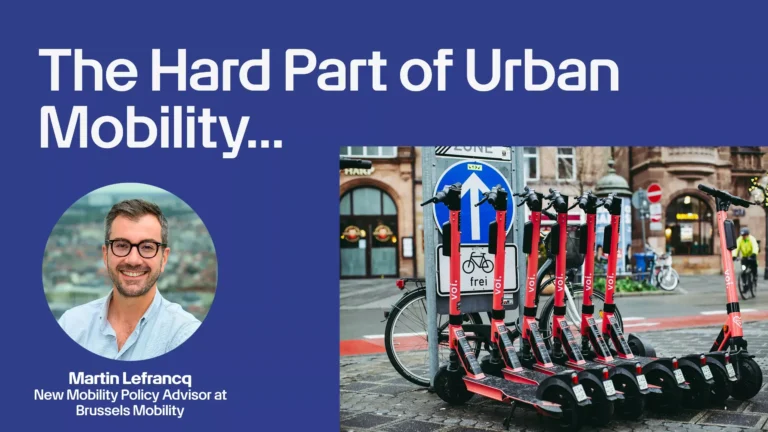
Charging bikes with the floor sounds like a gimmick… until you see Solum’s Helios dock sitting in the middle of a plaza, charging a whole row of scooters without a single cable in sight.
In this episode of Charging Stack, we talk with Luis Muñoz Lombardo, Co-Founder & CBO at Solum, about turning sidewalks into solar infrastructure, fixing messy parking, and giving cities a way to power micromobility without digging up streets.
Who this episode is for:
- City mobility teams trying to tidy up scooters and bikes without killing the mode
- Shared micromobility operators looking for reliable, low-OPEX charging
- Universities, workplaces, and real-estate owners who want clean parking without cable chaos
- Solar and energy folks curious how PV can live in pavements, not just on roofs
- Anyone building LEV infrastructure who needs both hardware and data to justify the spend
In this episode, you’ll learn:
⚡ How Solum’s Helios stations generate power from solar pavement and store it in onboard batteries
⚡ Why parking and charging for scooters and e-bikes has become such a headache for cities and operators
⚡ How Solum installs a full station in a few hours, without trenching or touching the grid
⚡ What the miSolum platform tracks in real time: usage, energy production, CO₂ savings, and asset performance
⚡ Where Solum is rolling out first in Europe, and why North and South America are on the radar next
Topics covered include
- The founder story: three friends from the renewables sector leaving their jobs to start Solum in 2019
- Why Spanish cities became an early testbed: high scooter usage, good weather, and crowded sidewalks
- How Helios works as a product: solar pavement, integrated batteries, docking rails, smart electronics
- What “standalone” really means in practice: no civil works, no trenching, no grid connection needed
- Typical installation flow: two technicians, a van, one working day, and the station goes live
- Where Helios fits: universities, offices, shopping centres, real-estate developments, municipalities
- Solar performance in the real world: daily kWh output, how many scooters/e-bikes that can cover, and what happens on cloudy days
- How the station prioritises availability: topping up more vehicles with partial charges instead of chasing 100% every time
- Grid-connected Helios G: when indoor or underground locations make more sense for wired charging
- Why design and aesthetics matter for solar in cities, especially in historic or sensitive locations
- How Solum’s PV pavement is engineered: weight resistance, people walking over it, cars and vans driving and parking on it
- Shading and partial coverage: how the system keeps generating even when parts of the surface are blocked
- miSolum software: dashboards for usage, energy, CO₂ savings, and alerts when something goes wrong
- Why data is key for customers chasing LEED/BREEAM scores and asset value in real estate
- The business case for buildings: using clean mobility and on-site solar to make properties more attractive and valuable
- The hardest part of selling something new: convincing cities and landlords that “floor solar” is real and reliable
- How Solum partners with local installers to scale across more than 10 European countries
- Connectors and compatibility: dealing with a chaotic mix of scooter and e-bike plugs while waiting for proper standards
- Where Luis sees big untapped potential: residential parking, office basements, and large private campuses
- Medium-term roadmap: more colours and finishes for PV pavement, better fit with historic districts, and early ideas for solar car parking
Subscribe to Charging Stack for more podcast episodes, deep dives, and case studies with the people keeping the future of mobility running. ⚡