


Charging Stack Podcast: Worksport is Turning Pickup Trucks into Solar Power Stations
Share your love
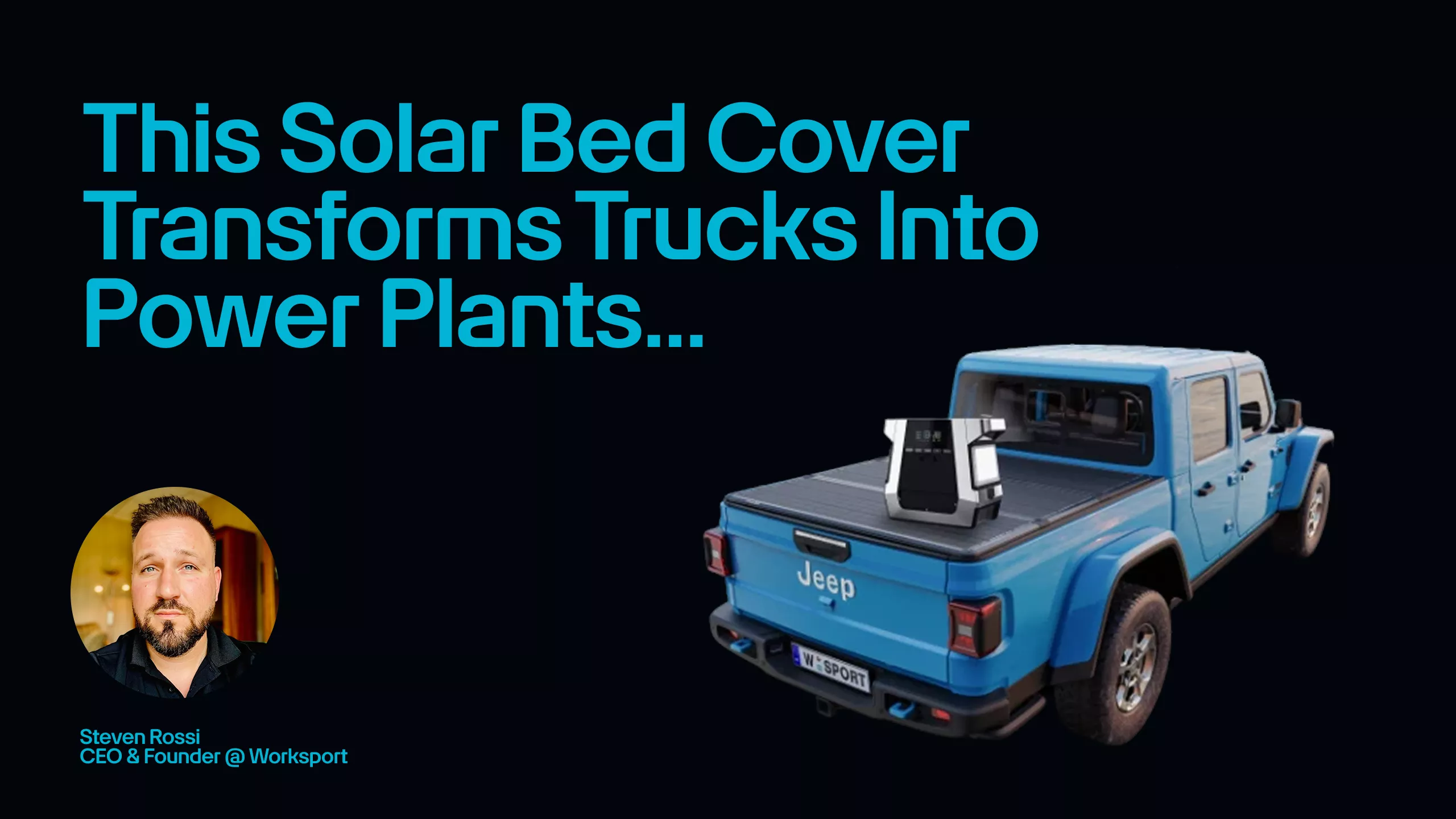
In this Charging Stack podcast episode, we talk with Steven Rossi, founder and CEO of Worksport (NASDAQ: WKSP) — the company turning pickup trucks into mobile power stations with solar truck bed covers and modular batteries.
Worksport started in the traditional tonneau cover market, but the real shift came when Steven’s father suggested adding solar to the cover back in 2013. That idea became SOLIS, a solar-integrated bed cover, and COR, a modular portable battery system that lets trucks power tools, campsites, and even parts of a home — without a drop of fuel.
Steven walks through how they took SOLIS from a rough, taped-together prototype to a high-spec product using flexible, high-efficiency panels from the same facility that supplies NASA. He also explains why “meaningful power” matters more than marketing claims, what makes COR different from a typical “dumb box of batteries,” and how Worksport is building U.S.-based manufacturing to scale all of this.
Everything about Worksport in one place
This episode is for you if:
- You work in pickup, accessory, or aftermarket industries and want to understand where the next profit pools are
- You care about off-grid or backup power for campsites, job sites, or emergency use
- You follow clean energy hardware and want a concrete example beyond rooftop solar and home batteries
- You’re curious how a small-cap public company is building its own factory and supply chain around solar + storage
In this episode, you’ll learn:
⚡ How a simple idea from Steven’s father turned truck bed covers into a clean energy platform
⚡ What SOLIS can realistically power, from TVs and tools to industrial fans and home loads
⚡ Why “meaningfulness of power” is the key metric for on-vehicle solar
⚡ How COR’s modular battery system solves the biggest flaw of typical portable power stations
⚡ Why Worksport is investing heavily in U.S. manufacturing instead of outsourcing everything to low-cost markets
⚡ How trucks, batteries, and connectivity could make households less dependent on the grid by 2030
Topics covered include
- How Worksport started with “normal” tonneau covers and spotted a bigger opportunity in energy
- The moment solar efficiency improved enough to make truck bed solar genuinely useful
- Why pickup trucks are ideal for solar: flat beds, lots of surface area, and tens of millions on the road
- What SOLIS actually delivers in numbers: ~250 W on small beds up to ~600 W on full-size pickups
- Why that power matters in practice (e.g. running a big industrial fan and still charging a battery)
- How SOLIS is built: three folding panels, flexible and impact-tolerant, designed for real work use
- The evolution of solar tech: from fragile, low-efficiency panels to today’s 22–23% efficiency and flexible formats
- How perovskite and high winter irradiance make solar more useful even in colder climates
- What makes COR different from typical “big box” batteries and why modular 1 kWh packs change the game
- How SOLIS + COR work together for almost continuous power: use one pack, charge another, repeat
- Key use cases: campsites, tailgates, job sites, and emergency backup when the grid goes down
- Extra COR features today (LCD control screen, emergency lighting) and future plans for built-in Wi-Fi/LTE/satellite
- Why Worksport chose to manufacture in New York, built a 100+ person team, and what that means for quality and OEM deals
- The long-term goal: trucks as mobile power hubs and modular batteries that cut reliance on the grid and fossil fuels
Subscribe to Charging Stack for more podcast episodes, deep dives, and case studies with the people keeping the future of mobility running. ⚡