
From EVs and batteries to autonomous vehicles and urban transport, we cover what actually matters. Delivered to your inbox weekly.
Electric cars are often pitched as the clean switch, but the conversation has shifted. As ranges rise, batteries tend to grow, and that pushes weight and manufacturing impact up.
A bigger share of the footprint happens before the first kilometer – the materials, battery production, and how much mass the vehicle carries for everyday city trips.
LIUX positions itself around that problem. It’s a Spanish startup pushing a small EV built around low mass, bio-based composites in the structure, and efficiency as the headline.
There’s also a clear commercial signal behind the story. In 2024, OK Ventures backed LIUX, and OK Mobility announced an agreement to add 5,000 units to its fleet over three years. That moves the conversation from concepts to real operating conditions.
This deep dive separates what LIUX has already shown from what it is still aiming to deliver, and tracks whether the approach holds up when pricing, service, and daily fleet use enter the picture.
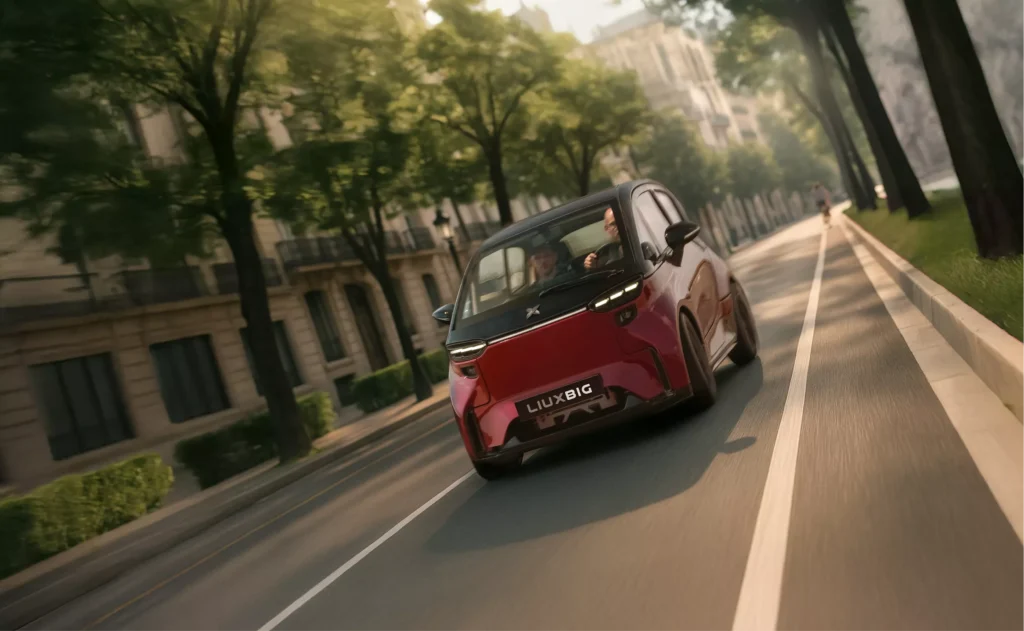
LIUX entered the market with a statement piece. Before the company talked about a compact city vehicle, it used a larger concept to introduce its worldview. This meant plant-based materials, lower-waste production, and a car designed around sustainability from the structure outward.
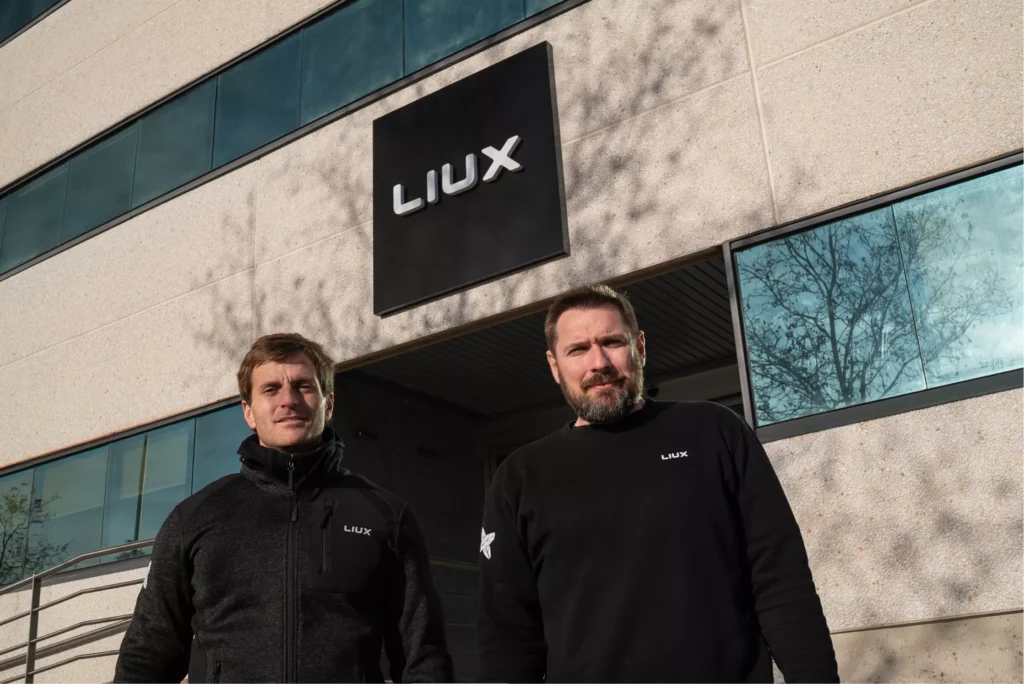
The company was founded in 2021 by Antonio Espinosa de los Monteros and David Sancho. From the start, LIUX framed the challenge in a different way. The goal was not only to electrify the vehicle, but to reduce the weight, material footprint, and production burden that usually come with it.
In late 2022, LIUX revealed Animal, a concept that put the materials story front and center, alongside heavy use of additive manufacturing language in the surrounding coverage. It set the tone for what LIUX wanted to be associated with.
After that, the company’s path tightened toward a city-first product that could reach market sooner than a mainstream passenger EV program. The key inflection point came in mid-2024, when OK Group, through OK Ventures, announced it was coming in as partner and lead investor.
On September 27, 2024, OK Mobility announced a deal to add 5,000 units of LIUX’s urban model to its fleet over three years. That’s the moment the story moved towards fleet miles, repairs, downtime, and cost per kilometer.
By October 15, 2025, El País Motor was framing the vehicle as a 2026 market launch, with LIUX positioning it under €18,000 (while noting the final price wasn’t yet closed in that reporting).
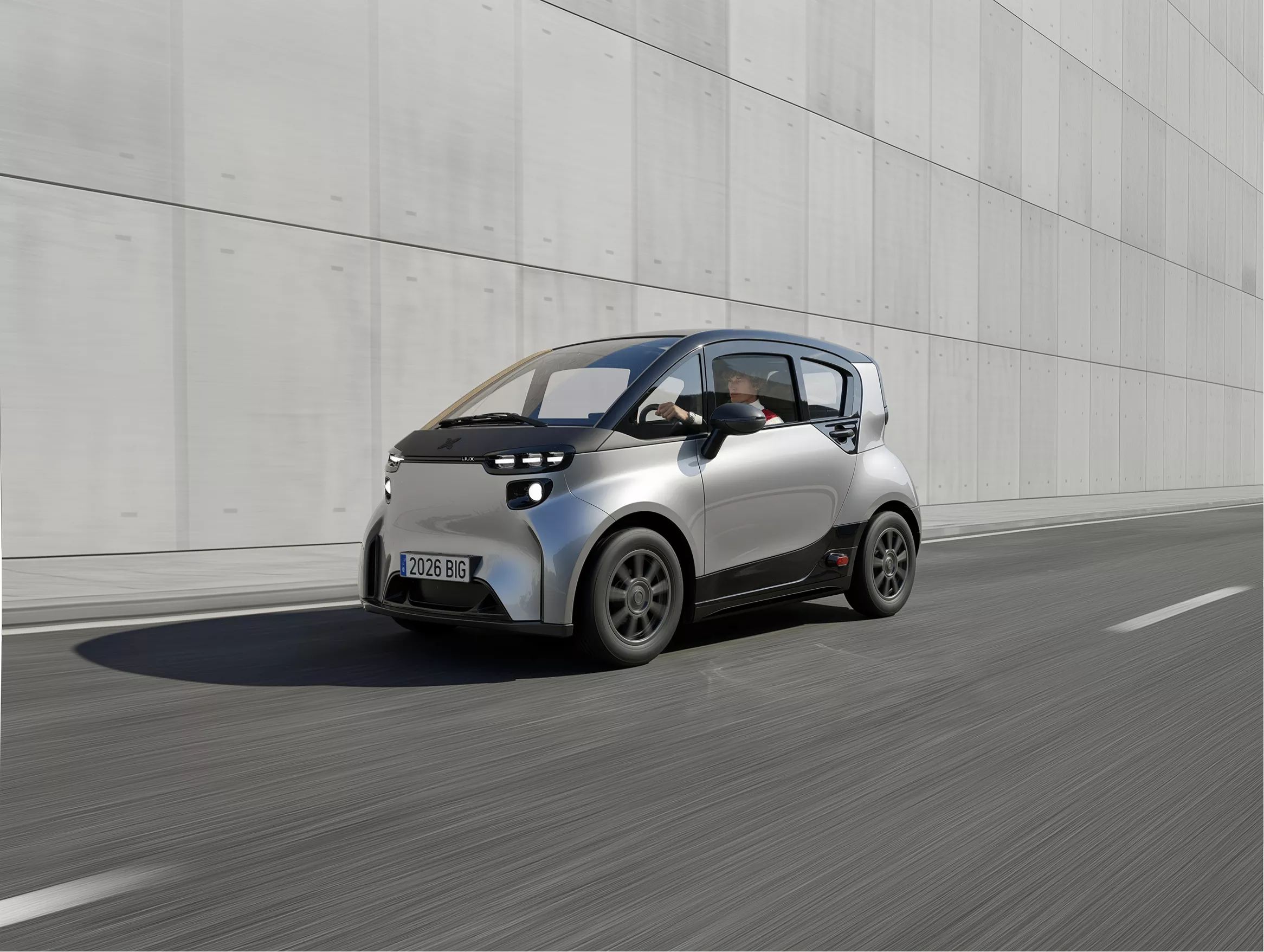
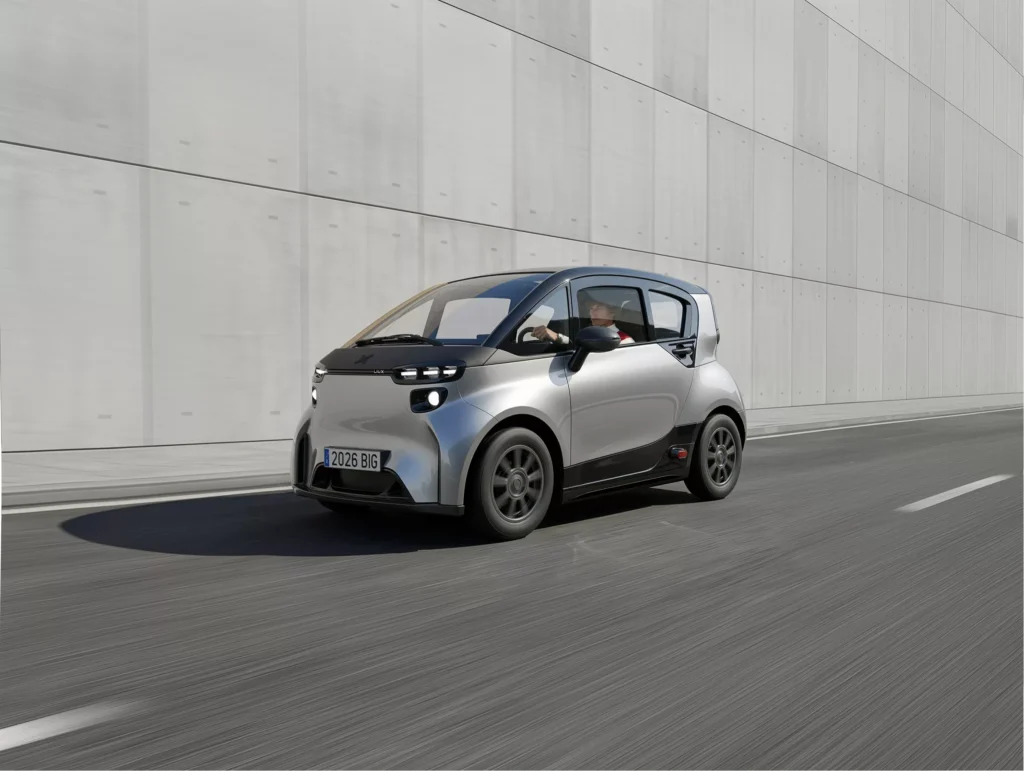
And by late 2025, LIUX was showing its pre-series prototype driving on the streets of Madrid. At that point, the company had moved beyond static presentations. The next phase was road miles, delivery readiness, and proof through use.
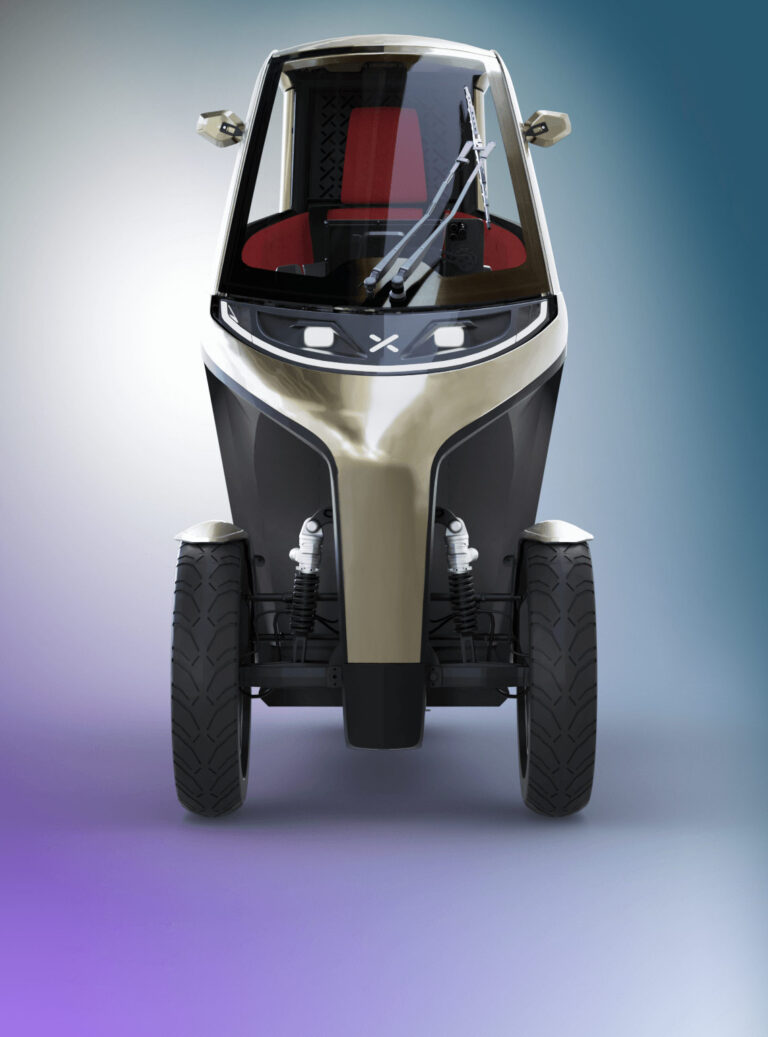
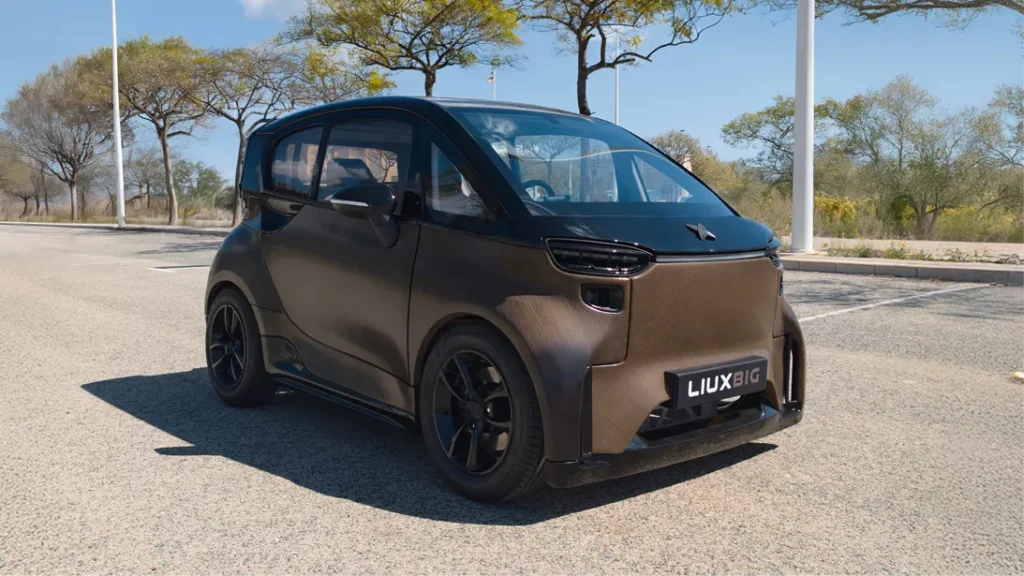
LIUX Big is the company’s first commercial model. It’s a 100% electric two-seater urban car in the L7e category, positioned for launch in 2026.
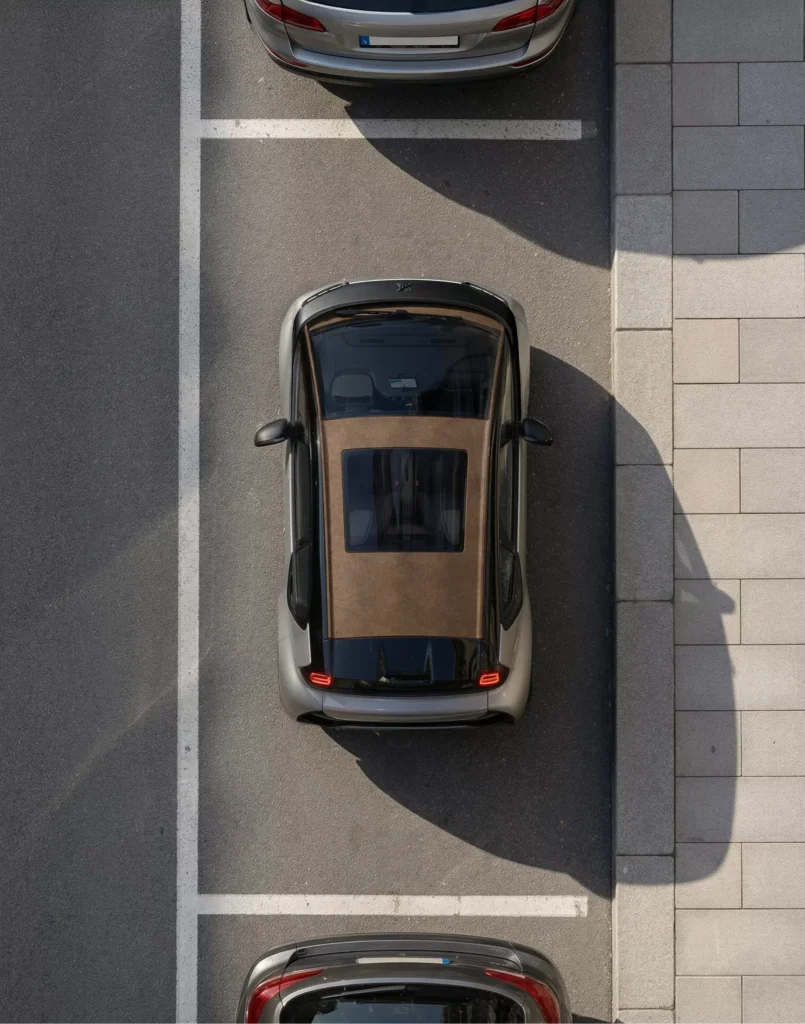
The packaging tells you exactly what it’s built for. Big is 2.7 meters long, with room for two passengers and a 240-liter trunk. That puts it firmly in the short-trip city category – compact enough for tight streets, but still useful for daily errands.
| Category | L7e |
|---|---|
| Layout | Two-seater urban car |
| Length | 2.7 m |
| Trunk | 240 L |
| Peak power | 35 kW |
| Torque | 140 Nm |
| 0–50 km/h | 4.5 s |
| Top speed | 90 km/h |
| Estimated consumption | ~8 kWh/100 km |
| Range options | 175 km / 230 km |
| Charging | 20%–80% in under 3 hours on a domestic socket |
The performance targets match that role. LIUX quotes 35 kW peak power, 140 Nm of torque, 0–50 km/h in 4.5 seconds, and a top speed of 90 km/h. Consumption is estimated at around 8 kWh/100 km, which is one of the more important numbers in the whole project because it ties the lightweight design directly to running cost.
Range comes in two versions. LIUX positions Big at 175 km in the smaller-range setup and 230 km in the larger one. Charging is framed around normal home use, with 20% to 80% in under three hours on a domestic socket.
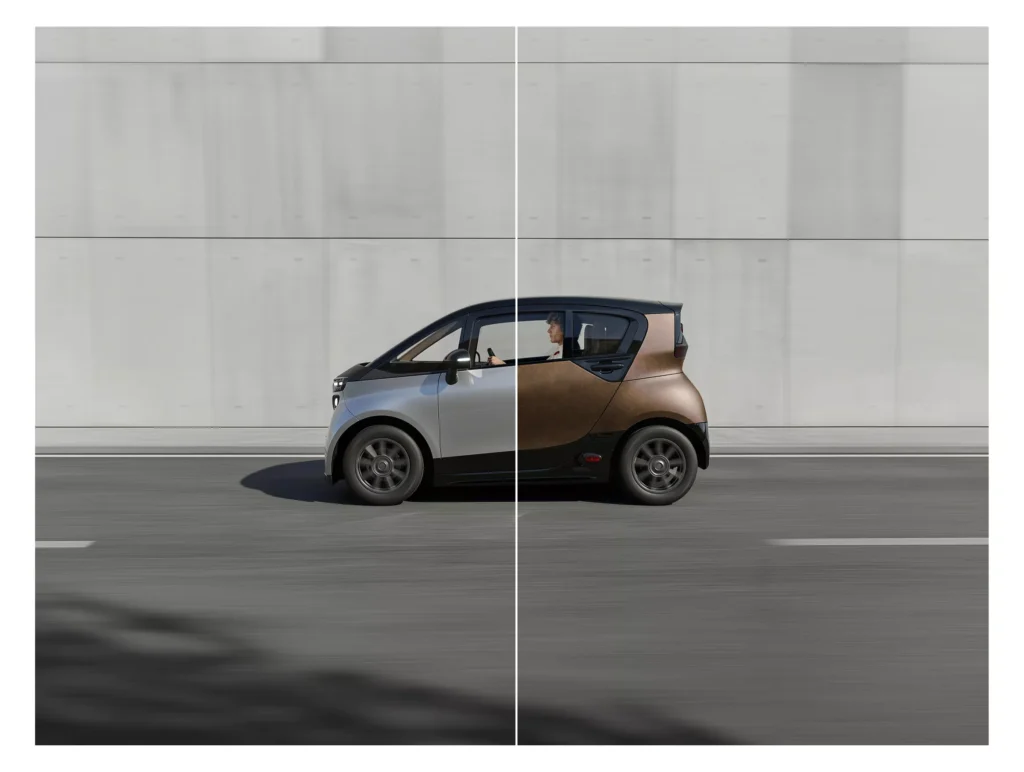
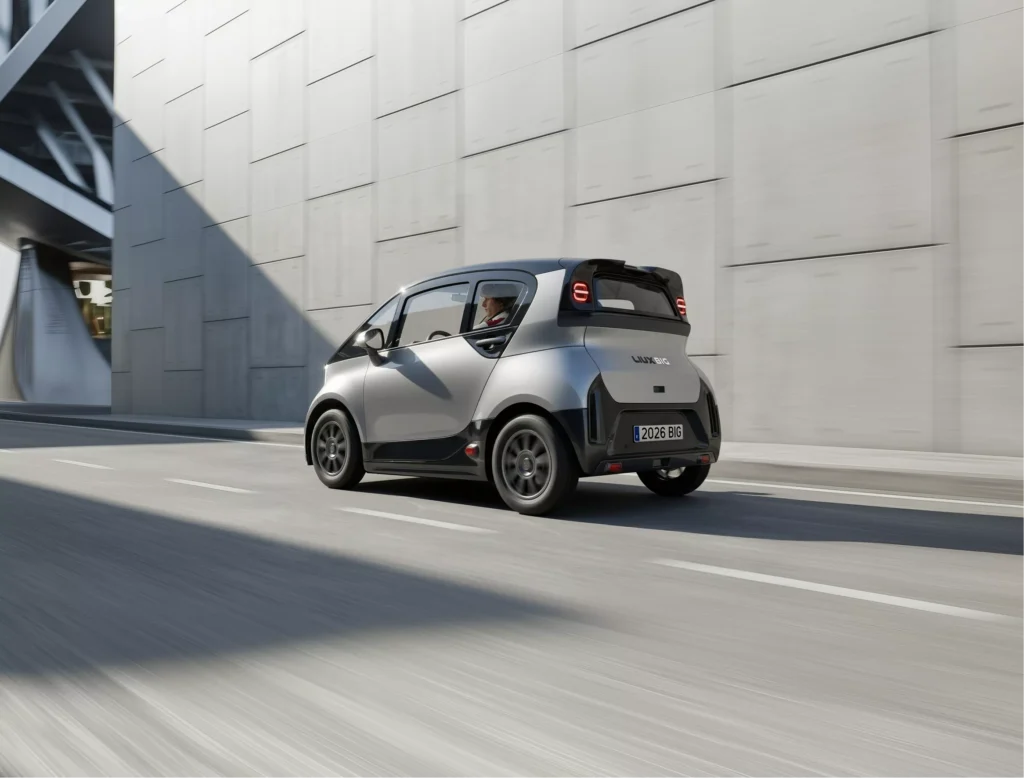
Where Big starts to separate itself is the bodywork. LIUX builds the car around a linen/flax-fiber biocomposite body, and links that to two core claims – up to 40% lower weight and 40% lower CO₂ emissions compared to an urban EV. The company also frames the bodywork as fully recoverable, with resins and fibers designed to be separated at end of life.
The safety story matters too. Big is not presented as an “all-composite” object. LIUX pairs the biocomposite approach with an anti-intrusion monocoque and reinforced steel structure and doors, which is a more practical way to balance lightweight construction with daily-use protection.
Inside, the spec sheet stays simple but usable. LIUX lists heating and air conditioning, an integrated sound system, electric windows and mirrors, and a panoramic roof. The result is a city car that aims to feel light, efficient, and straightforward rather than stripped out.
Taken together, Big is a product built around one idea: keep the vehicle small, keep the mass down, and let that choice improve the rest of the package. The real test now is no longer the concept. It’s how these numbers hold up once the car moves from launch materials into daily use.
LIUX is built around an idea that city mobility gets better when the vehicle gets lighter, simpler, and easier to build responsibly. The company’s differentiators follow that logic. Each one pushes toward lower mass, lower waste, and a product that makes sense in daily use.
The main technical bet is the bodywork. LIUX says Big uses a linen / flax-fiber biocomposite bodywork and ties that to up to 40% weight reduction. On the emissions side, the company says this approach cuts CO₂ by 40% compared to an urban EV and by up to 80% compared to a combustion SUV.
That matters because weight sets the package. Less mass helps efficiency, keeps the battery from growing too large, and lowers the energy needed for everyday city use. Over time, that can also reduce wear and keep running costs under control.
The structure also carries a safety angle. LIUX pairs the lightweight bodywork with an anti-intrusion monocoque and reinforced steel structure and doors. The company describes the bodywork as fully recoverable, with fibers and resins designed to be separated at the end of the product’s life cycle.
The next step is no longer the concept. It’s proof through use. City vehicles live through curbs, tight parking, vibration, weather, and repeated repairs. That’s where this materials story either turns into a real advantage or stays a good idea on paper.
LIUX doesn’t frame the bodywork as a one-way material. The company says Big uses resins and fibres that can be separated at the end of their life cycle, with the goal of making the bodywork fully recoverable.
That matters because circularity in automotive usually gets talked about in broad terms. LIUX is trying to make it part of the product logic from the start. If the material can be recovered cleanly, the car leaves behind less waste and relies less on fresh input the next time around.
In LIUX’s own words, that is what makes the system work as true circularity.
LIUX gives Big two battery options, tied to the 175 km and 230 km range versions. The bigger point is how the battery is framed. LIUX presents it as a modular, easily removable LFP battery system that is free from cobalt and nickel.
That changes the ownership story. The battery is treated as its own asset, separate from the vehicle, which gives LIUX room to talk about continuous upgrades without forcing the whole car into obsolescence. It also makes the system easier to manage over time, whether the goal is replacement, improvement, or reuse.
For fleets, that can simplify planning around maintenance and long-term value. For private owners, it creates a more stable picture over the life of the vehicle. And once the battery is no longer fit for road use, LIUX positions it for a second life as an energy storage system.
Handled well, this kind of battery strategy keeps the car useful for longer and makes the most expensive part of the vehicle easier to manage.
LIUX is trying to build cars without taking on the full weight of a traditional car factory from day one. The production logic leans on composites, lighter tooling, and a setup designed to move faster than the classic stamping-heavy model.
That matters for a young automaker, because it changes the economics of getting to market. Lower tooling pressure keeps the first industrial steps more manageable. Faster iteration makes it easier to improve processes without rebuilding everything around them. And a lighter production model gives the company more room to grow in stages instead of making one giant manufacturing bet upfront.
LIUX frames this as a large-scale industrial project built for sustained growth, backed by significant investment, a strong commitment to innovation, and the potential for job creation. LIUX also says that all design, engineering, and R&D are carried out in Spain, supported by a top-tier supplier network.
That shifts the story from “interesting startup method” to something more concrete. The challenge then becomes consistency. Parts need to come out the same way, every time, and the build process needs to stay predictable as volume rises.
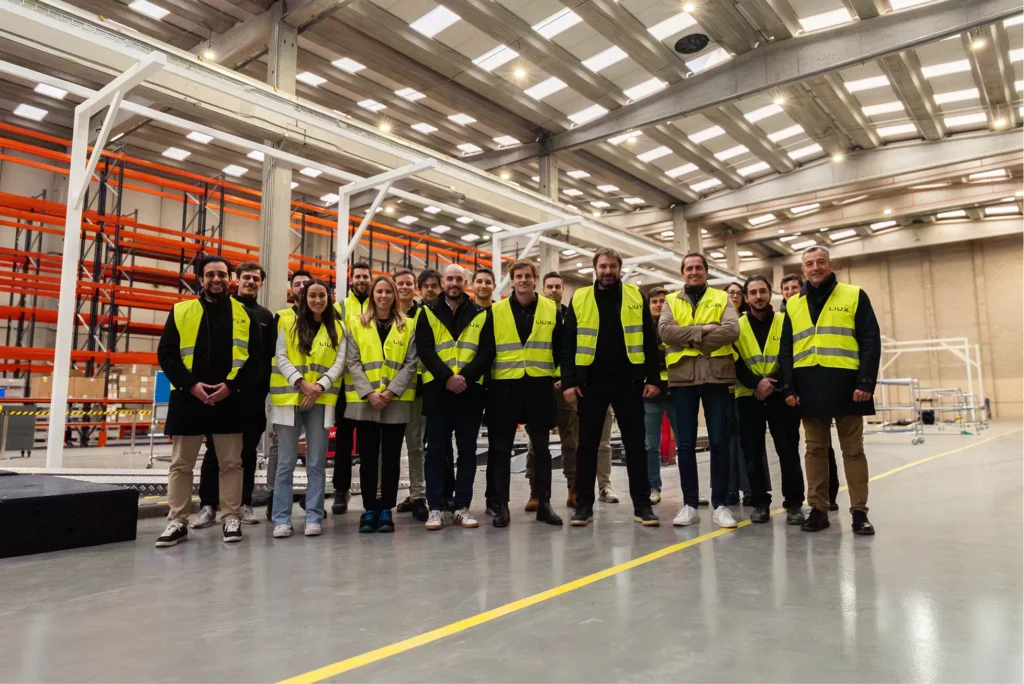
LIUX has tied its identity to building in Spain from the start. That story is now much more concrete. According to the company, LIUX has established its first production plant in Azuqueca de Henares, Guadalajara, and frames it as the first car factory inaugurated in Spain in the last 30 years, as well as the first in Guadalajara in more than a century.
That changes the tone of the production story. The focus is no longer only on prototypes, workshop space, or future intent. LIUX is now presenting BIG as part of a made-in-Spain industrial project, with all design, engineering, and R&D carried out in Spain, supported by what it calls a top-tier supplier network.
From a 2026 point of view, the headline is simple – this is the launch year. Spanish coverage has positioned LIUX Big as a 2026 market release, with LIUX also flagging a target below €18,000 while noting pricing wasn’t fully closed at the time.
There are also real signs of the company building the physical layer behind the pitch. In early 2024, LIUX moved its workshops from Santa Pola to Elche Parque Empresarial, into a 1,500 m² space. That’s not “mass production confirmed,” but it is the right step in the right direction, especially when they’re building more than prototypes.
1) Repeatability
Same panel fit. Same finish. Same assembly time. Consistency is what makes a new vehicle feel mature.
2) Steady suppliers
Cells, electronics, and commodity parts do not need to be local. They need to arrive on spec, on schedule, and without constant disruption.
3) Service from day one
BIG is meant for daily urban use. That makes fast parts, clear repair steps, and short turnaround times part of the product, not an afterthought.
4) Fleet miles as an accelerator
The 5,000-unit agreement is useful because it puts vehicles into daily rotation. It creates fast learning, and it turns feedback into fixes while volumes are still ramping.
If LIUX gets those four right, “Made in Spain” starts functioning like an advantage with shorter loops, tighter control, and a clearer path from first units to a stable cadence.
LIUX has moved past the stage where the story alone is enough. In 2026, the real work is rollout: getting vehicles out, keeping support tight, and turning launch interest into a system that can hold.
OK plays a big role in that shift.
In 2024, OK Group, through OK Ventures, came in as partner and lead investor. That was followed by OK Mobility’s agreement to add 5,000 vehicles over three years, using the model across its rental, subscription, and leasing channels. That matters because it gives LIUX more than capital. It gives the company a first layer of demand, an early operating environment, and a way to get the vehicle into daily use quickly.
That setup helps in three clear ways.
1) A baseline to build around
A committed fleet channel gives LIUX something concrete to plan against. Procurement, production cadence, parts stock, and service routines all get easier when early demand is already visible.
2) A fast learning loop
Fleet use creates road miles quickly. Vehicles get driven harder, wear patterns show up sooner, and the company gets a faster read on what needs tightening before the retail network expands.
3) A launch channel with reach
OK Mobility already has locations, customer flow, and a business model that fits an urban vehicle like BIG. That gives LIUX a practical way to put cars into service while the broader commercial network grows.
The fleet path is only part of the picture. LIUX’s initial commercial phase is focused on Spain, Italy, and France, with the goal of expanding progressively across Europe after that. The distribution model is built around dealerships specialized in sustainable vehicles, supported by after-sales service integrated directly with the factory and spare-parts warehouse.
That matters because it makes ownership feel normal from the start. Buyers do not only need a product. They need service access, clear support, and a sales channel that feels established enough to trust.
LIUX has positioned BIG under €18,000, and the company has already pointed to strong early interest around that level. In this segment, price shapes the whole market. Stay low enough and BIG competes as a practical city vehicle: second car, small-business tool, fleet unit, urban runabout. Move too far upward and the comparison shifts toward full small cars, where expectations rise quickly.
That’s also why the OK relationship matters beyond launch optics. Fleet deployment can support early volumes, generate real operating data, and build confidence faster than retail alone. From there, the challenge is simple to describe: deliver on time, support the vehicle properly, and make ownership feel easy.
Big will be judged against three different reference points, and each one sets a different expectation.
1) Ultra-basic microcars (Ami-style)
These win on ease. Big-brand trust, simple ownership, broad service coverage, and pricing that makes the trade-offs feel acceptable. They keep pulling the whole segment back to one baseline: how cheap and convenient can this be?
2) Lifestyle L7e (Microlino-style)
These sell design and character first. Then they get judged like small cars. Buyers expect decent fit and finish, proper heating, low noise, and aftersales that feels reliable. Production maturity matters here, because small quality misses stand out quickly.
3) Practical L7e commuters
This is the working middle. Vehicles built for everyday urban duty, often as second cars or fleet tools. The test is simple – uptime, operating cost, and support.
LIUX has a coherent angle, and it ties back to measurable things.
The incumbents have three boring advantages that are hard to shortcut:
That’s the matchup. LIUX has a clear thesis and a product with a visible point of difference. The segment already has players with stronger support systems and more manufacturing history. The winner will be the one that stays reliable, easy to repair, and economically sensible once the novelty wears off.
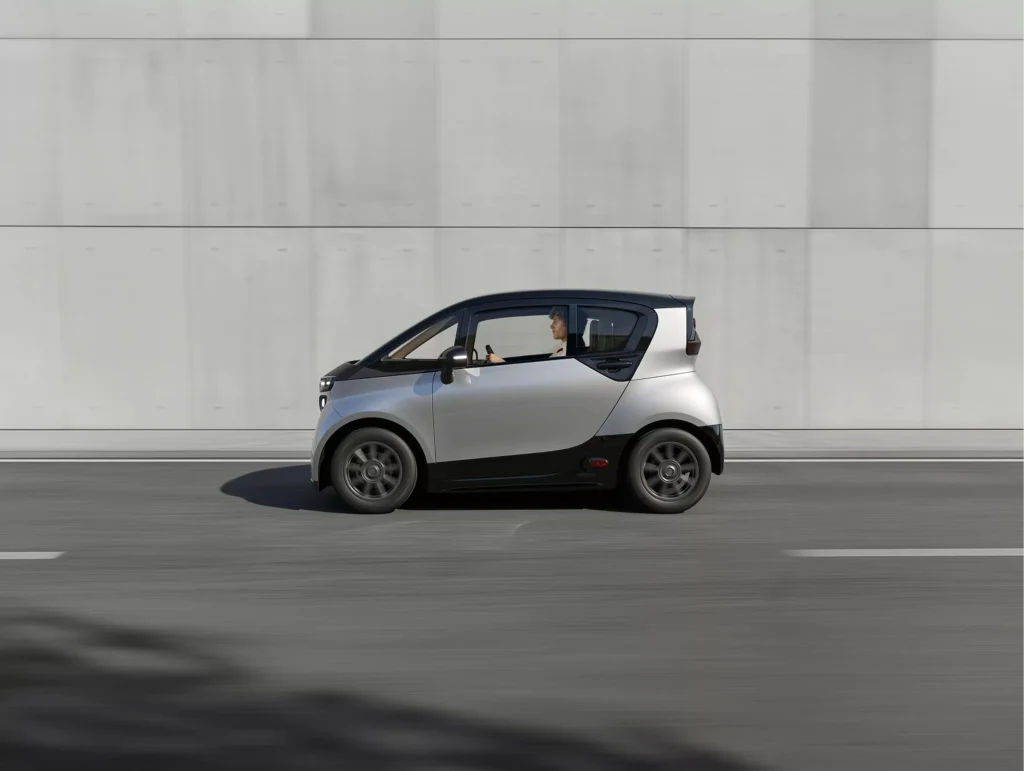
This is the year LIUX moves from launch material to operating reality. The company is positioning BIG for a 2026 commercial window, and describes it as a vehicle homologated for highways and interurban roads. That makes 2026 the point where the published numbers start turning into fixed ones.
The first proof point is the final spec in real use. Weight, range, efficiency, top speed, and charging behavior all matter more once the vehicle is out of presentations and into daily driving.
Then come the fleet miles. The OK rollout should generate the first dataset that really matters: uptime, days out of service, repeat fault patterns, maintenance cost per kilometer, and real energy use across city routes. Those numbers will show whether BIG works as a usable urban vehicle, not just a well-framed concept.
The next layer is support. City vehicles take constant small hits, so service needs to feel routine from day one. Fast parts, clear repair procedures, trained partners, and insurance terms that stay reasonable are what turn a new brand into something buyers and fleets can trust.
And then there’s production rhythm. A launch only starts to feel real when build quality stays consistent, rework stays low, warranty noise stays contained, and suppliers keep hitting spec and schedule week after week.
If LIUX gets those basics right, the rest gets easier. Confidence builds, repeat orders follow, and BIG starts to feel less like a new idea and more like a normal option in the market.
LIUX’s bet lives in the build.
BIG brings several ideas together in one vehicle. The bodywork uses a linen / flax-fiber biocomposite. The structure adds reinforced steel where protection matters most. The battery is framed as a modular, removable LFP system. And the whole program sits inside a Made in Spain industrial project built for growth.
That combination gives LIUX a very clear thesis. Keep the car light. Keep the energy use down. Keep the production model lean enough to reach market without the burden of a traditional car factory from day one.
2026 is where those choices meet normal use. The questions are practical. Do parts keep flowing. Do repairs stay simple. Does the bodywork hold up in tight streets and daily knocks. Does service stay predictable. Do deliveries settle into a steady rhythm.
When those pieces come together, trust follows. That is what turns early interest into repeat fleet orders, stable demand, and a city vehicle that feels like it belongs in the market.